He once again felt the same restlessness
of three days ago, 2025
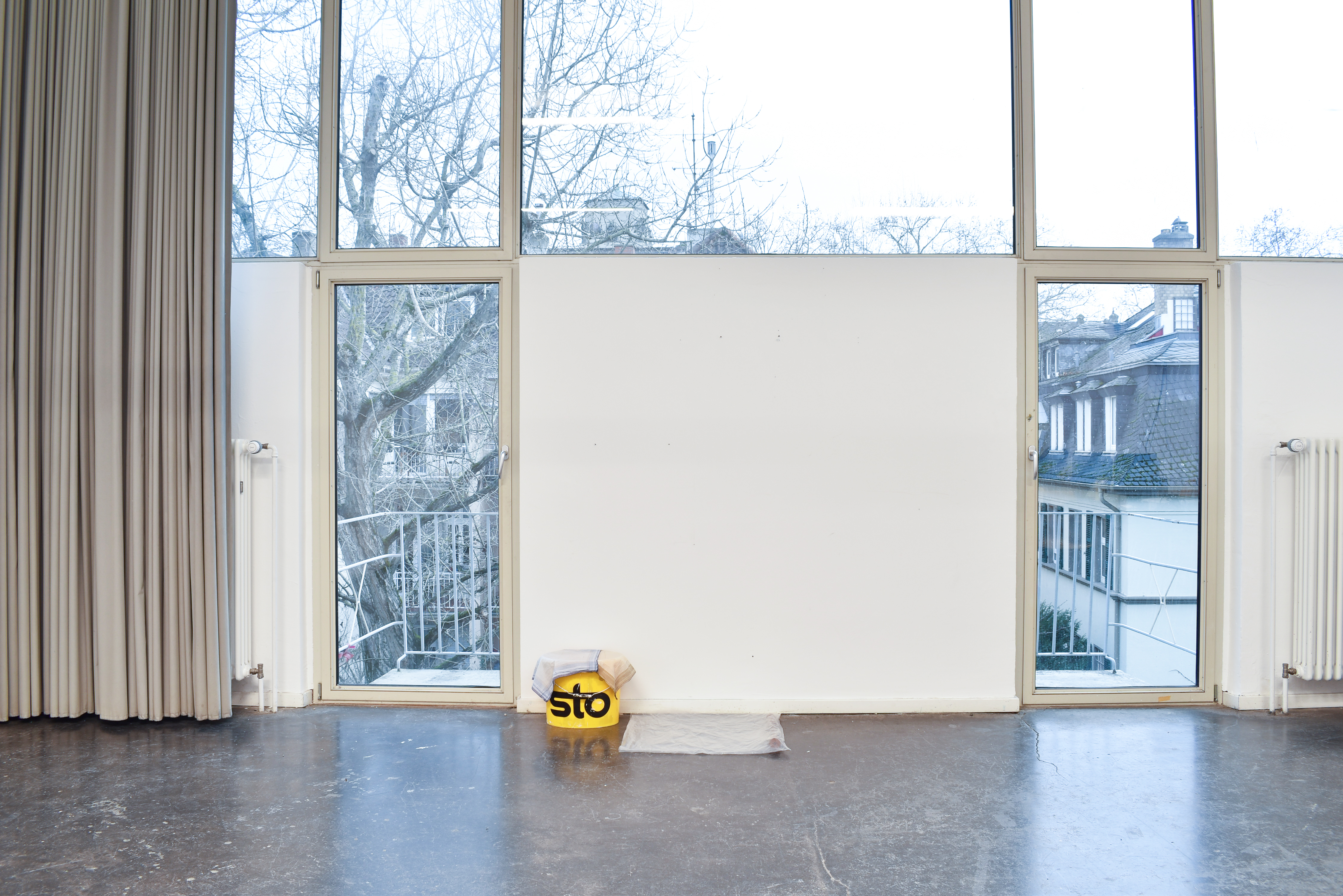
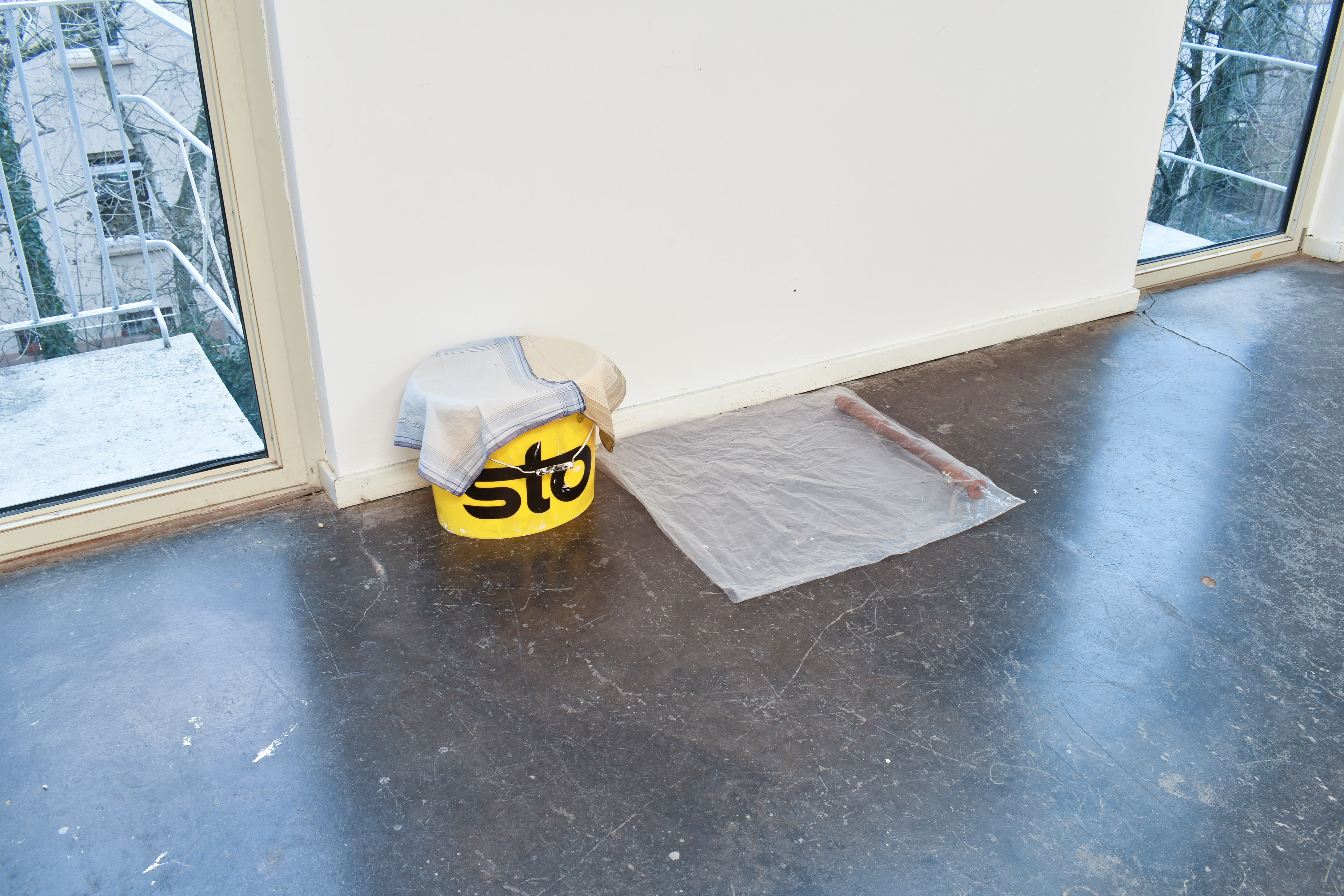
Yellow surface with STO plastic barrel,
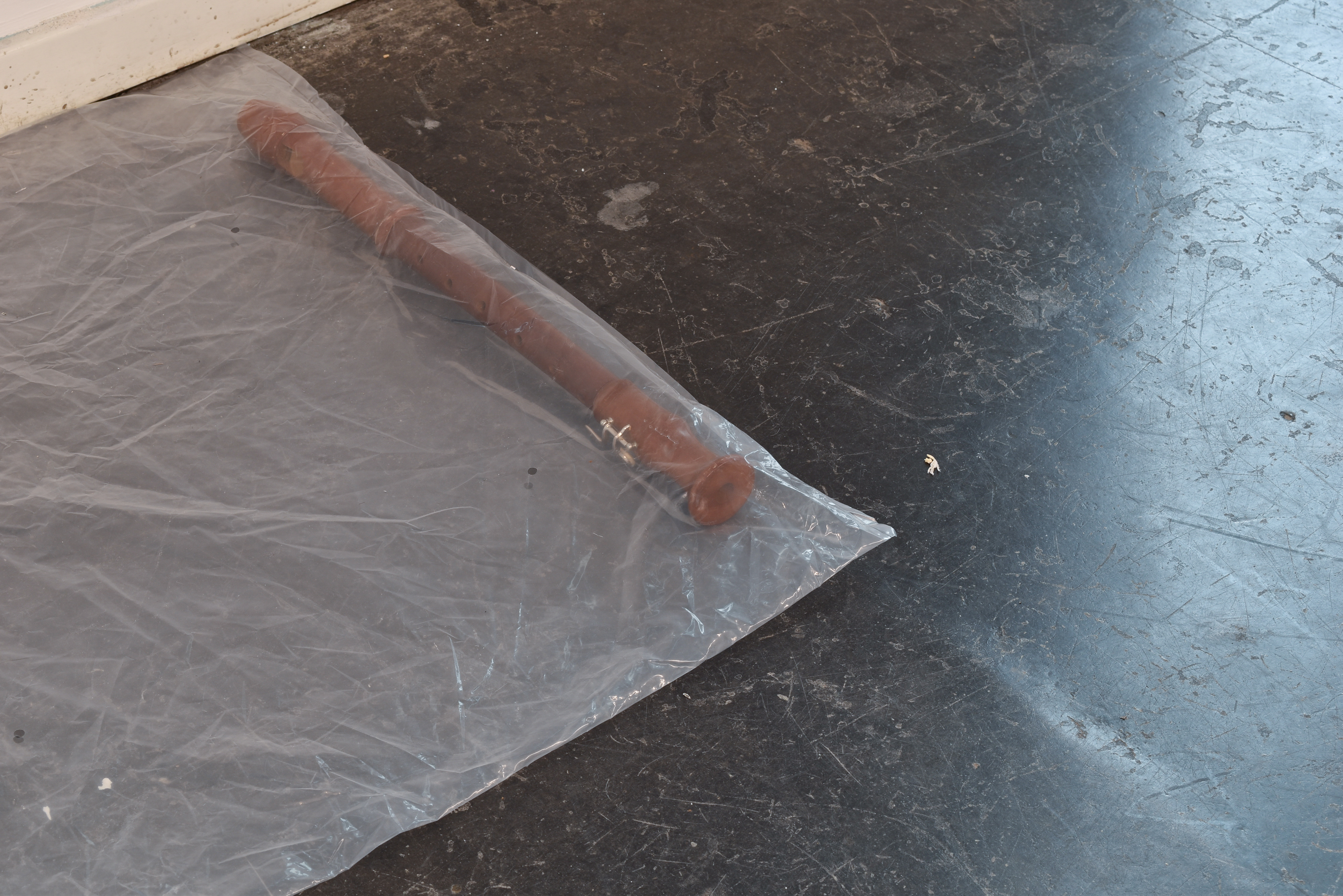
two square scarves, wooden Baroque Alto Recorder in a transparent plastic bag
Dimensions variable
These objects are placed together, but they refuse to cohere into a single narrative.
The work operates through deliberate incongruity. Each element carries its own history, its own set of associations—the industrial anonymity of the plastic barrel, the intimacy of fabric against skin, the historical specificity of a Baroque instrument now sealed away like evidence or refuse. They sit beside each other without explanation, without a clear hierarchy that would tell you which object matters most or what story they're meant to tell together.
This is intentional. I'm interested in how narrative gets constructed, and more importantly, how it gets imposed. We're trained to look for coherence, to build connections between things that appear in the same frame. The mind searches for the thread that ties these objects together—a protagonist who used them, a sequence of events that links them, a symbolic key that unlocks their meaning. But the work withholds that satisfaction.
The title offers something—a feeling, a temporal marker. "He once again felt the same restlessness of three days ago." It's novelistic, almost cinematic. But it doesn't clarify; it only deepens the ambiguity. Who is "he"? What happened three days ago? The restlessness returns, but we don't know what caused it in the first place. The title functions less as explanation and more as another object in the arrangement, one more element that creates resonance without resolution.
By keeping the narrative decentered, the work challenges the expectation that objects should serve a predetermined ideological function. Ideology loves coherence—it wants every element to point in the same direction, to reinforce a singular reading. By placing these objects together without a clear program, the work asks viewers to sit with their own discomfort, their own need to impose order. What stories do you project onto these things? What do you need them to mean?
The confusion is productive. It opens space for multiple readings, for contradictory associations. The recorder might suggest refinement, historical culture, European tradition—but it's trapped in plastic, inert, possibly broken. The scarves might be personal, gendered, tied to the body—but whose body, and why two? The barrel is utilitarian, almost ugly, the kind of object that usually disappears into the background of construction sites or storage rooms. Together, they propose a narrative that keeps collapsing, that refuses to stabilize into a single interpretation.
This is how the work questions ideology: not by opposing it directly, but by undermining the mechanisms through which ideological meaning gets fixed in place. It refuses the comfort of a centered story, the security of knowing exactly what you're looking at and why it matters. What's left is the restlessness itself—yours, mine, the unnamed "he" in the title—a feeling that returns without resolution, three days ago and now and again.