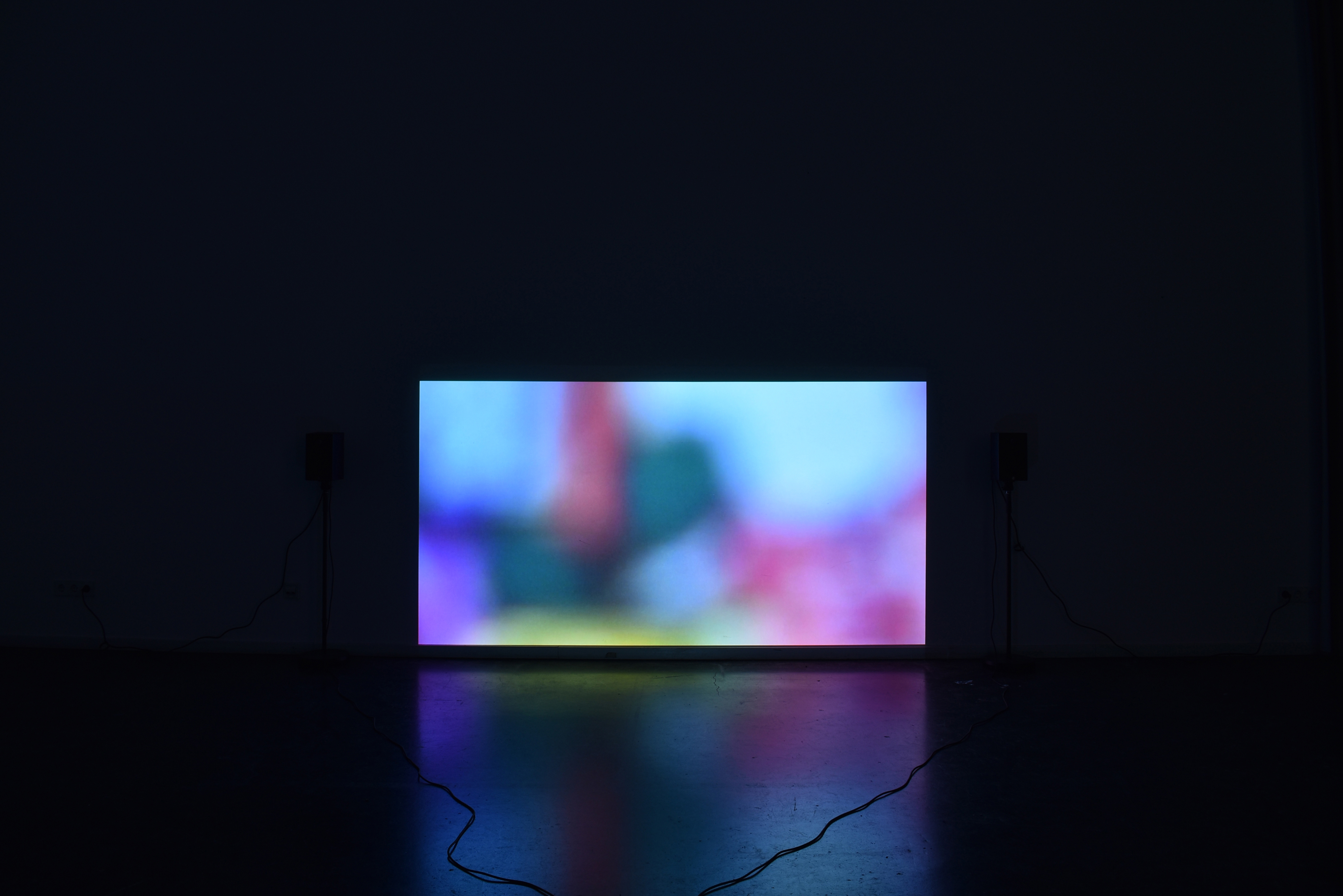
There will be a duel tonight, 2025
HD video, 15’59”, 2024 China National Day flowerbed footage, loop.
Audio, 8’31”, Kirsten Flagstad - Liebestod (Furtwängler 1952), loop.
Tiredness
There will be a duel tonight, which is a 16-minute video work that deconstructs monumentality through deliberate fragmentation. The piece centres on a massive floral installation created for China's National Day 2024—18 meters in height with a 45-meter diameter—originally photographed from an official elevated vantage point. Rather than reproduce this authoritative view, I filmed my computer screen with a handheld camera, moving slowly and intimately across the digital surface. This restless navigation breaks the totalizing image into shifting fields of colour and texture, rendering the recognisable sublime arrangement abstract and the monumental uncomfortably close.
The optical deconstruction is accompanied by Wagner's music, slowed by 15% to stretch its already operatic dimensions into something between the sublime and the unbearable. The temporal distortion amplifies both the tragic weight of the score and an underlying sense of exhaustion—not only Wagner's romantic excess, but the fatigue embedded in ideological spectacle itself.
The title introduces a third temporal layer. "Duel" is a word nearly extinct in contemporary language, yet it carries an unmistakable sense of tragedy, honour reduced to violence, and obsolescence. In bringing together these three elements—the dismantled symbol of state ideology, the slowed Wagnerian sublime, and the ghost of the duel—the work constructs a narrative heavy with historical and ideological residue.
Tiredness, both literal and conceptual, permeates the piece. The physical act of filming left my right arm aching—a bodily inscription of duration and labour that becomes inseparable from the work itself. But tiredness here also functions as a conceptual stance: a weariness toward the relentless deployment of the sublime in service of ideology, and perhaps toward the seductive pull of tragedy itself. What remains is not resolution, but the slow, difficult labour of looking closely at what refuses to be seen.
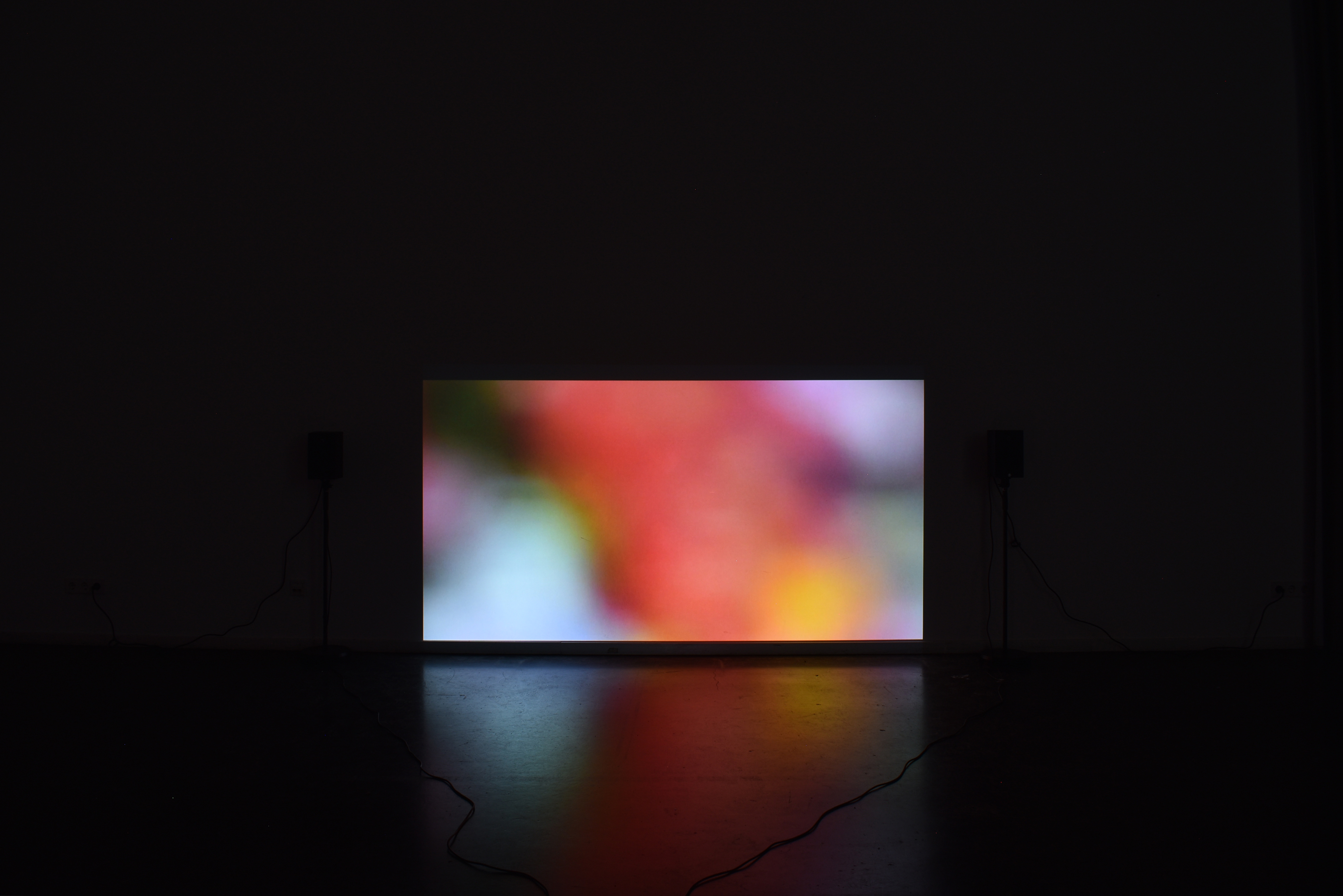
HD video, 15’59”, 2024 China National Day flowerbed footage, loop.
Audio, 8’31”, Kirsten Flagstad - Liebestod (Furtwängler 1952), loop.
Tiredness
There will be a duel tonight, which is a 16-minute video work that deconstructs monumentality through deliberate fragmentation. The piece centres on a massive floral installation created for China's National Day 2024—18 meters in height with a 45-meter diameter—originally photographed from an official elevated vantage point. Rather than reproduce this authoritative view, I filmed my computer screen with a handheld camera, moving slowly and intimately across the digital surface. This restless navigation breaks the totalizing image into shifting fields of colour and texture, rendering the recognisable sublime arrangement abstract and the monumental uncomfortably close.
The optical deconstruction is accompanied by Wagner's music, slowed by 15% to stretch its already operatic dimensions into something between the sublime and the unbearable. The temporal distortion amplifies both the tragic weight of the score and an underlying sense of exhaustion—not only Wagner's romantic excess, but the fatigue embedded in ideological spectacle itself.
The title introduces a third temporal layer. "Duel" is a word nearly extinct in contemporary language, yet it carries an unmistakable sense of tragedy, honour reduced to violence, and obsolescence. In bringing together these three elements—the dismantled symbol of state ideology, the slowed Wagnerian sublime, and the ghost of the duel—the work constructs a narrative heavy with historical and ideological residue.
Tiredness, both literal and conceptual, permeates the piece. The physical act of filming left my right arm aching—a bodily inscription of duration and labour that becomes inseparable from the work itself. But tiredness here also functions as a conceptual stance: a weariness toward the relentless deployment of the sublime in service of ideology, and perhaps toward the seductive pull of tragedy itself. What remains is not resolution, but the slow, difficult labour of looking closely at what refuses to be seen.